
Sell Me Your Name: How Jo Malone Lost Control
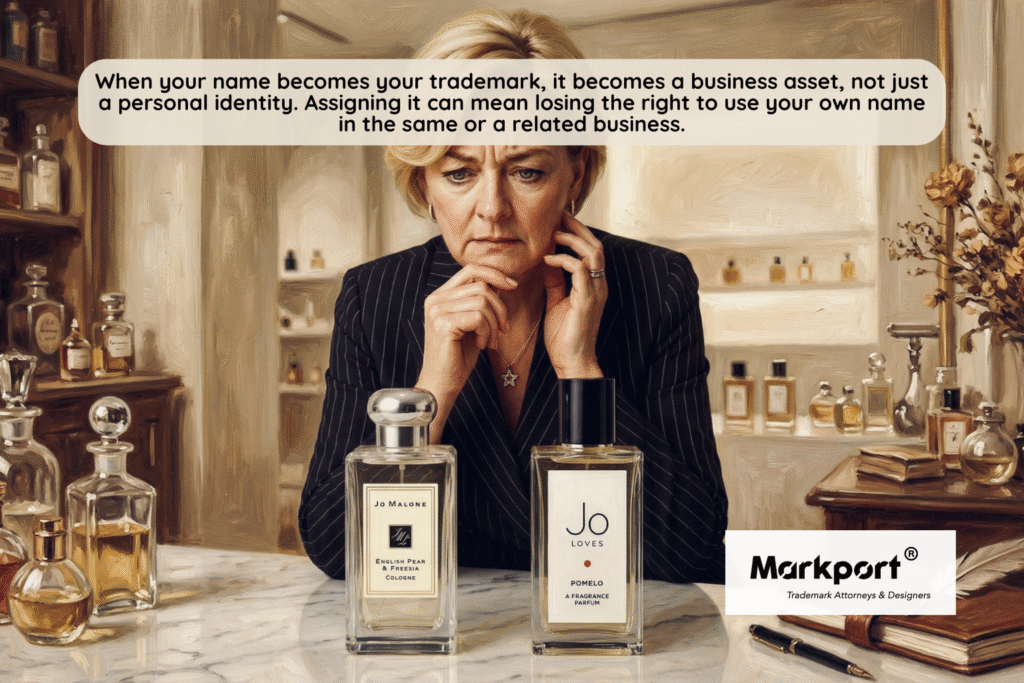
Your Name Can Become Someone Else’s Property
Jo Malone is a founder who built a global fragrance brand from her personal story, her creative instincts, and her name. Her name became the brand. Her reputation became the value. And her identity became property when it was used and registered as a trademark.
This is the core lesson for SMEs. When Jo Malone sold her company to Estée Lauder in 1999, she also sold the commercial rights to use her name for fragrances. Today, that decision sits at the centre of a legal dispute involving Jo Malone, her new brand Jo Loves, and a fragrance collaboration with Zara.
Just like any form of property, you can assign your trademark to another person. This move deprives you of the right to use your own name for that specific business.
How Intelligent Trademark Management Protects Your Future
After leaving her original company, Jo Malone launched Jo Loves. Years later, Jo Loves partnered with Zara to create a new fragrance line. Reports show that Zara used attribution such as:
“Created by Jo Malone CBE, founder of Jo Loves.”
Estée Lauder responded with legal action in the United Kingdom. They allege breach of contract, trademark infringement, and passing off. Their position is clear. They own the trademark “Jo Malone” for fragrances. They argue that using her name in this context may confuse consumers and imply a link with the original brand.
This is not a copying case. It’s a matter of contract and asserting property rights.
It raises a practical question for every business owner. Who controls your name once it becomes a trademark?
To avoid this situation, SMEs can take several practical steps.
Think before using your personal name as a brand
It feels authentic to use your own name as a brand, but it can limit your future options once that name becomes part of a registered trademark. In many cases, your personal name turns into a commercial asset that someone else controls, which can restrict how you use it in your next venture.
Understand what you are selling
When you assign a trademark, you transfer the goodwill and the exclusive rights attached to it. This means the buyer gains full control over how that name or brand can be used in the market. As a result, you may be giving up more than you realise, especially if you plan to stay active in the same industry.
Negotiate carve outs
If you plan to stay in the same industry, negotiate clear boundaries that allow you to keep using your name in defined ways. For example, a founder who sells a fashion label might agree not to use their surname as a new clothing brand, but still keep the right to use their full name for consulting or creative work.
Be careful with attribution
Even factual statements can create legal risk if they imply a connection with a brand you no longer own. In a commercial setting, even a simple line like “created by” or “founded by” can suggest endorsement or ongoing involvement, which may mislead customers. This perceived link can trigger claims of infringement or passing off, even when the statement itself is technically true.
Treat trademarks as long term assets
They grow in value as your business expands and your reputation strengthens. They also create long term obligations because the rights you transfer or retain will shape what you can do in the future. Good trademark management protects your flexibility and supports a brand strategy that can grow with your business.
With the right planning, SMEs can avoid disputes, protect their identity, and build brands that last.
How Markport Helps You Protect and Design Your Brand
At Markport, we help businesses protect their trademarks and design brands that grow with them. Our services support SMEs at every stage of the brand journey.
Trademark Protection
- Trademark searches
- Clearance advice
- Filing and registration
- Portfolio management
- Enforcement support
Brand and Design Support
- Brand naming guidance
- Brand architecture planning
- Design protection strategies
- Practical advice for founders using personal names
We help you build a brand that is strong, flexible, and future proof. We help you avoid the mistakes that lead to disputes like the Jo Malone case. And we help you protect the identity you are working hard to build.
If you want to secure your brand and plan your next steps, contact us here: https://markport.com.au/contact-us/
Further Reading
Markport, Trademarks FAQ for Australia. Available at: https://markport.com.au/trademarks-faq-for-australia/
BBC News, Estée Lauder sues Zara over Jo Malone name use. Available at: https://www.bbc.com/news/articles/cp00x0j9y2jo
The Guardian, Estée Lauder sues Zara over Jo Malone name use. Available at: https://www.theguardian.com/fashion/2025/jan/17/estee-lauder-sues-zara-over-jo-malone-name-use
UK Intellectual Property Office, Personal names as trade marks. Available at: https://www.gov.uk/government/publications/trade-marks-acceptance-practice/personal-names
World Intellectual Property Organization, Assignment and licensing of trademarks. Available at: https://www.wipo.int/sme/en/ip_business/mark/assignment_licensing.htm