
Sattar Buksh: A Trademark Lie We Love to Believe
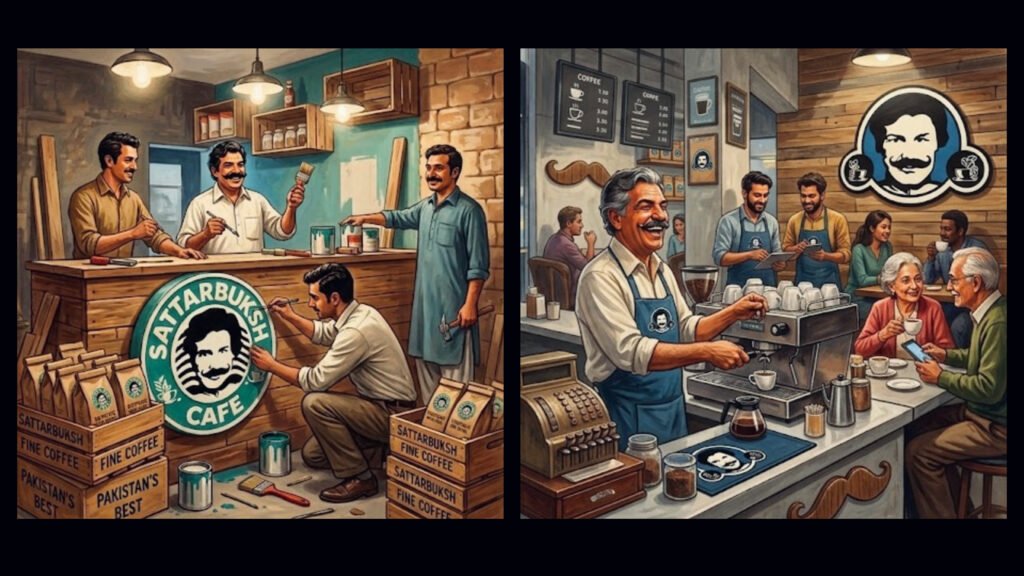
Most of us have come across the story of how a small Pakistani café, Sattar Buksh, supposedly defeated the US giant Starbucks in a trademark battle. The name itself has local roots. “Sattar” is a common male name in Pakistan meaning “one who conceals faults,” while “Buksh” means “giver.” Together, “Sattar Buksh” means “given by Sattar.” The story is often told as a clever underdog win. However, the reality is far less dramatic and far more instructive. There was no court victory. There was no legal ruling in favour of Sattar Buksh. What actually happened was a settlement. Based on the café’s subsequent actions, it appears that Sattar Buksh had to adjust its branding in response to Starbucks’ demands to avoid litigation. While this was reported in more grounded terms by legitimate news and business publications, the story took on a life of its own online, where it was repeated, simplified, and often exaggerated into something it was not.
What Actually Happened
Sattar Buksh opened in Karachi in 2013.
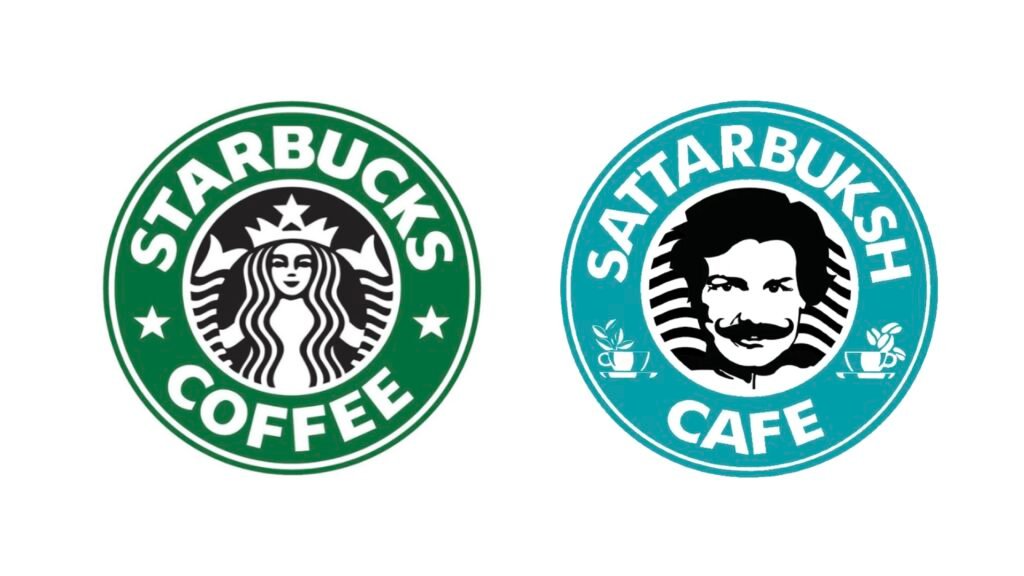
From the start, its branding closely resembled Starbucks:
- A green circular logo
- A central figure styled similarly to the Starbucks siren
- A name that sounded very close to “Starbucks”
This approach generated immediate attention. The café became widely known online.
However, it also created legal risk.
Starbucks issued a cease and desist letter, arguing that:
- The branding was confusingly similar
- Consumers could assume an association
- The use could dilute its well-known trademark
Sattar Buksh responded by saying:
- The name was a legitimate local name
- The concept was parody
- The branding reflected local culture
At that point, the matter could have gone to court.
It did not.
The parties settled.
There was no court ruling. No decision on infringement. No legal precedent.
What the Settlement Likely Involved
The settlement terms were not disclosed. That is standard practice.
However, the café’s actions after the dispute are clear.
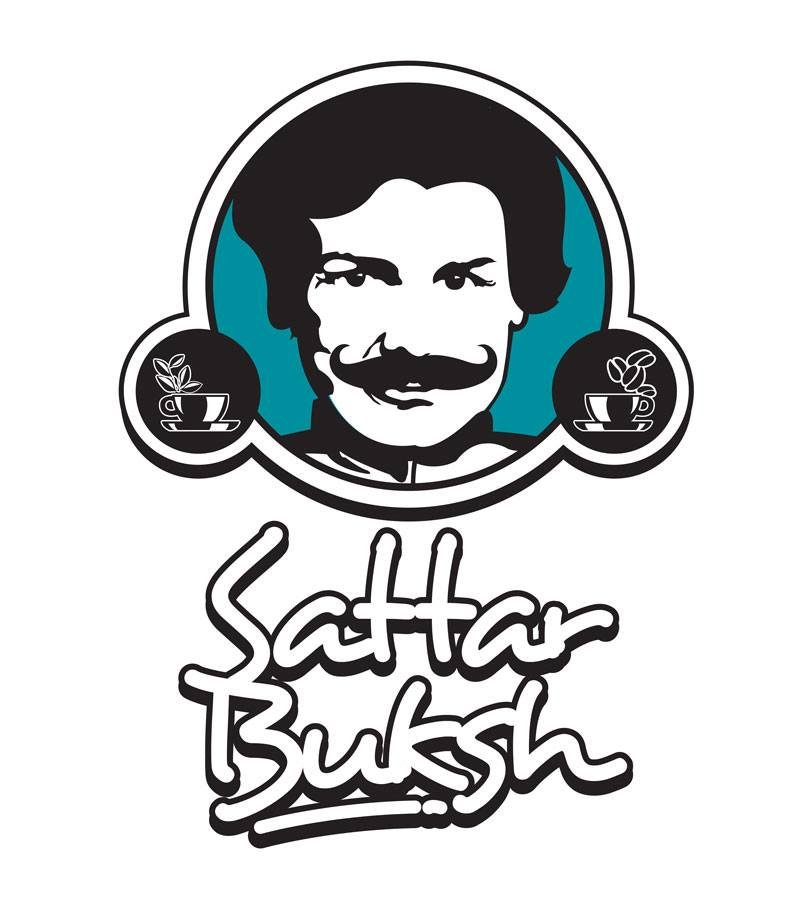
- The logo was changed significantly
- The green circular design was removed
- The central figure was redesigned
- A disclaimer was issued denying any connection to a foreign brand
- The name “Sattar Buksh” was retained
From a practical perspective, this looks like a compromise.
Starbucks achieved its goal of removing confusing branding.
Sattar Buksh retained its name and continued operating.
Why This Was Not a Victory
Many people assume this was a win because:
- The café continued operating
- The name remained unchanged
- The story went viral
But none of these points reflect a legal outcome.
There was no finding that the branding was acceptable.
There was no confirmation that parody applied.
There was no decision in favour of Sattar Buksh.
This was a settlement.
And settlements are not victories. They are negotiated outcomes to avoid litigation.
What Settlements Really Mean for SMEs
In practice, most trademark disputes settle.
Businesses choose this path because litigation:
- Is expensive
- Takes time
- Creates uncertainty
A settlement allows both parties to move forward.
Typically:
- No liability is admitted
- No rights are conceded
- Each side agrees to practical adjustments
Settlements are also confidential.
The public does not see the actual terms. That is why online narratives are often incomplete.
The only reliable way to understand the outcome is to look at what changed.
In this case, the branding changed. That tells you where the pressure was applied.
The Gap Between Online Fame and Business Reality
Sattar Buksh became widely known online.
Memes, articles, and simplified summaries turned it into a global talking point.
However, that visibility did not translate into business scale.
Despite having over 67,000 followers on Facebook, the business operates only a single restaurant.
This is the key point.
While the story and its many distorted versions became famous online.
But it did not become a strong, scalable brand.
What Small Businesses Should Take From This
If you are building a brand, the lesson is straightforward.
Do not rely on:
- Parody
- Mimicry
- Borrowed recognition
These approaches may generate attention, but they limit your growth.
You may face:
- Legal pressure
- Forced changes to your branding
- Difficulty building independent brand value
At some point, your business risks being seen as a novelty rather than a serious brand.
A More Practical Approach to Branding
To avoid these issues, focus on building something original.
- Choose a name that is clearly distinctive
- Avoid similarities in sound, look, and concept
- Conduct a proper trademark search before launching
- Register your trademark early
- Design your brand with long-term growth in mind
A strong brand should stand on its own, not depend on comparison.
How Markport Helps SMEs
At Markport, we help small businesses build brands that are:
- Distinct
- Protectable
- Scalable
Our services include:
- Trademark search and strategy
- Trademark registration in Australia and internationally
- Brand protection and enforcement
- Brand design support aligned with your business goals
We help you design and protect a brand that you can call your own forever, not something you simply copied from someone else for temporary amusement online.
Ready to get serious with your branding?
Further Reading
Yaqoob, S. (2025). Sattar Buksh Cafe vs Starbucks Coffee Trademark Dispute of Pakistan.
https://www.researchgate.net/publication/395290502_Sattar_Buksh_Cafe_vs_Starbucks_Coffee_Trademark_Dispute_of_Pakistan
Trademarks FAQ for Australia. Available at: https://markport.com.au/trademarks-faq-for-australia/