
Same Crocs, New Courts: TM Battles in PHL and India
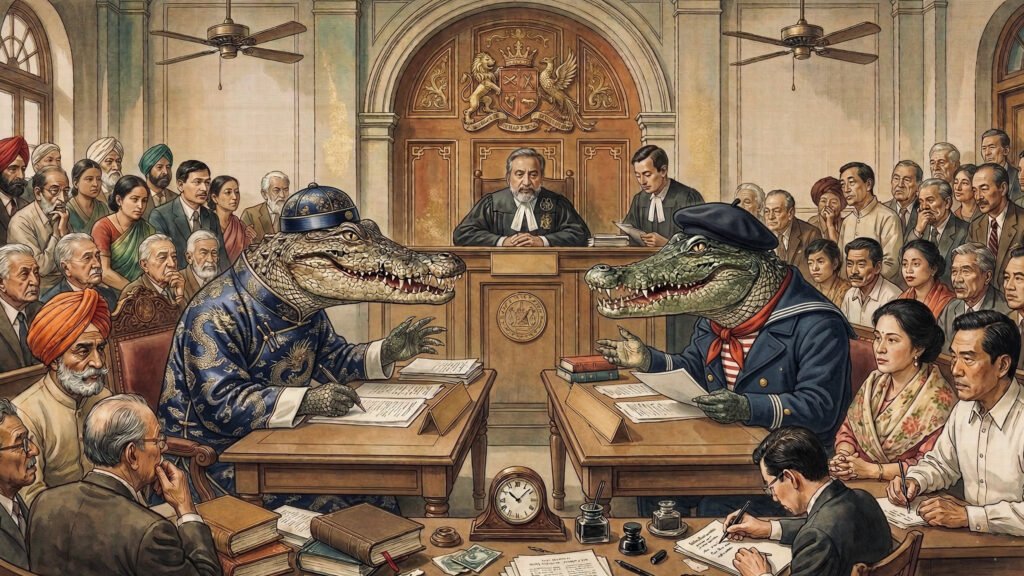
The dispute between Lacoste and Crocodile shows how the similar cases involving the same trademarks can produce opposite results in different jurisdictions. In the Philippines, the Supreme Court allowed registration of the Crocodile trademark, finding no likelihood of confusion. In India, the Delhi High Court reached the opposite conclusion and found the use of the Crocodile trademark to be infringing.
These divergent outcomes demonstrate how trademark rights are territorial and shaped by the legal and commercial realities of each country. Courts may reach different decisions based on differences in applicable laws, analytical frameworks, jurisprudential histories, and the specific facts presented. Factors such as how the mark is actually used in the market, the presence or absence of distinguishing elements, and the nature of consumer perception all play a role. In the end, trademark disputes are highly context-driven, and what is acceptable in one jurisdiction may expose a brand to risk in another.
Here’s a detailed chart showing the differences and similarities between the Philippine and Indian cases:
| Philippines (Supreme Court, 2023) | India (Delhi High Court, 2024 and 2026) | |
| Case Title | Lacoste S.A. v. Crocodile International Pte. Ltd., G.R. No. 223270, Second Division, Supreme Court of the Philippines (2023). Full text available at: https://sc.judiciary.gov.ph/223270-lacoste-s-a-vs-crocodile-international-pte-ltd/ | Lacoste & Anr v Crocodile International Pte Ltd & Anr, CS (COMM) 1550/2016, High Court of Delhi, Single Judge Decision dated 14 August 2024; affirmed in Crocodile International Pte. Ltd. v. La Chemise Lacoste, RFA(OS)(COMM) 18/2024, Division Bench Decision dated 9 March 2026. Full text available at: https://indiankanoon.org/doc/8149560/ |
| Outcome | The Supreme Court allowed Crocodile International’s mark to proceed to registration, finding that there was no likelihood of confusion between the competing marks. | The Delhi High Court found that Crocodile International’s use of the crocodile device constituted trademark infringement and restrained its use in India. |
| Core Issue | The dispute centered on whether the applied mark could be registered, specifically whether it was confusingly similar to a prior registered mark. | The dispute centered on infringement, particularly whether the actual use of the crocodile device without distinguishing elements violated Lacoste’s rights. |
| Legal Framework | The court applied Republic Act No. 166 (Trademark Law of 1947) because the application was filed in 1996, before the Intellectual Property Code (Republic Act No. 8293) came into force on 1 January 1998. | The court based its decision on the Trade Marks Act, 1999 (India), and supplemented it with common law principles on infringement, deceptive similarity, and passing off. |
| Test Applied | The Court applied the Dominancy Test, focusing on the dominant features of the marks. | The Court applied a deceptive similarity and likelihood of confusion analysis based on real-world use. |
| Dominant Feature | The court identified the crocodile device as the dominant element, yet concluded that similarity by itself did not create a likelihood of confusion. | The court treated the crocodile device as the central feature and found that the impugned mark replicated its posture and overall concept. |
| Treatment of Differences | Differences in direction, style, and detailing were sufficient to distinguish the marks. | Differences were considered minor and unlikely to be noticed by consumers. |
| Conclusion on Similarity | The court found that the marks were visually and commercially distinct. | The court found that the marks were conceptually identical and confusingly similar. |
| Role of Word Element | The word ‘Crocodile’ helped distinguish the source of goods. | Removing the word element reduced the distinctiveness of Crocodile’s mark and increased its similarity to Lacoste’s device. In the market, Crocodile used the graphic alone, without the word “Crocodile,” which removed the key distinguishing element. |
| Consumer Perspective | Consumers were assumed to exercise reasonable care. | Consumers were assumed to rely on general impressions. |
| Nature of Goods | Higher-value goods reduce likelihood of confusion. | Identical goods increase likelihood of confusion. |
| Prior Use / Priority | Not decisive. | Lacoste’s prior rights over the standalone device were decisive. |
| Co-existence Agreement | Supported coexistence. | Not applicable in India. |
| International Co-existence | Persuasive. | Rejected due to territoriality. |
| Bad Faith / Intent | Absence of bad faith supported registration. | Intent does not negate infringement. |
| Actual Market Use of the Mark | Focus was on the registered mark. | Standalone use removed distinguishing elements and increased similarity. |
| Trademark Infringement Finding | Not relevant to the case. | Infringement found. |
| Passing Off | Not central. | Rejected. |
| Copyright Claim | Not applicable. | Rejected under merger doctrine. |
| Key Doctrinal Emphasis | Differences matter. | Similarity in use prevails. |
Why This Case Matters for Your Brand
Some business owners assume that a registered trademark gives global protection. It does not. Trademark rights are territorial, which means you need to secure and manage your rights in every country where you do business. Because of this, a brand that works in one market can still be infringing in another.
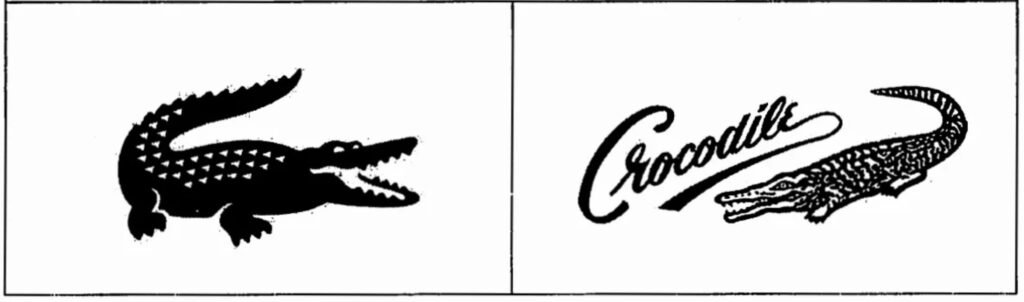
In the Philippines, the court allowed the mark because it found that the differences between the two brands were sufficient to avoid confusion. The court focused on the visual distinctions in the crocodile designs, including orientation, style, and overall presentation. Based on this analysis, it concluded that consumers could distinguish between the marks and that the two brands could coexist in the market.
In India, the court reached a different conclusion because it dealt with infringement, not just registration. This required the court to go beyond the mark as shown in the trademark register and examine how it was actually used in business. Although Crocodile had registered a composite mark that included both the word “CROCODILE” and the device, it used only the crocodile graphic in the market. This use did not match the registered form of the mark and removed the key feature that distinguished it from Lacoste’s brand. As a result, the crocodile device stood on its own and moved much closer to Lacoste’s core identity. The court found that this increased the likelihood of confusion and treated the use as infringing.
These decisions do not conflict. They complement each other. The Philippine case shows how courts assess similarity at the registration stage, based on the mark as filed. The Indian case goes further and shows what happens when the mark is actually used in the market. It highlights that even if a mark is registrable, the way it is used in business can still lead to infringement.
Your brand is not only what you register. It is how you use it in your business. Even if your trademark is approved, using it differently in the market can weaken your protection and expose you to risk.
How to Protect Your Brand Across Borders
So how do you avoid this situation?
Get advice early
It is more practical and cost-effective to address risks before launch than to deal with a dispute after your brand is already in use.
Use your trademark consistently and in line with your registration
If you registered a word and logo together, use them together. Do not remove or change the elements that make your brand distinct.
Check local rules before expanding into new markets
Trademark laws are territorial. Each country applies its own legal tests and standards. What works in Australia or the Philippines may not work in India or elsewhere.
Align your brand design with your legal strategy
Branding is not just about appearance. It is also about protection. A simple logo can be effective, but only if it remains clearly distinguishable from other marks in the market.
How We Can Help
At Markport, we help SMEs protect and build brands that can grow across markets without unnecessary risk.
Our services include:
- Trademark searches and risk assessments
- Trademark applications in Australia, New Zealand, The Philippines, and all other jurisdictions in the Madrid System
- Brand strategy and logo design aligned with legal protection
- Ongoing trademark monitoring and portfolio management
If you require help in protecting, managing, or redesigning your brand, reach out to us:
Further reading:
Battle of the Crocs: A Trademark Battle in the Philippines. Available at: https://markport.com.au/battle-of-the-crocs-a-tm-battle-in-the-philippines/
Trademarks Are Territorial. Available at: https://markport.com.au/trademarks-are-territorial/
Trademarks FAQ for the Philippines. Available at: https://markport.com.au/trademarks-faq-for-the-philippines/
Trademarks FAQ for Australia. Available at: https://markport.com.au/trademarks-faq-for-australia/
Lacoste S.A. v. Crocodile International Pte. Ltd., G.R. No. 223270, Second Division, Supreme Court of the Philippines (2023). Available at: https://sc.judiciary.gov.ph/223270-lacoste-s-a-vs-crocodile-international-pte-ltd
Crocodile International Pte. Ltd. v. La Chemise Lacoste, RFA(OS)(COMM) 18/2024, Division Bench Decision dated 9 March 2026. Available at: https://indiankanoon.org/doc/8149560